

By Tiyani Rodrigo
The federal government disbursed COVID – 19 relief funds to the SEAs through Coronavirus Aid Relief, and Economic Security (CARES) Act for the Elementary and Secondary School Emergency Relief Fund (ESSER) Fund (ESSER I), Coronavirus Response and Relief Supplemental Appropriations (CRRSA) Act (ESSER II), and American Rescue Plan (ARP) Act (ARP ESSER). Through these three funding rounds, Kentucky received over $2.7 billion (ESSER I – $0.2 billion, ESSER II – $0.8 billion, and ARP ESSER – $1.7 billion).
Finding 1: District awards varied widely in both ESSER I and ESSER II
One of the main policy goals of ESSER funding is to provide a compensatory learning experience to students whose learning experience was disrupted during the pandemic (Shores & Steinberg, 2022). However, the goal of ESSER funding looked different between the three funding rounds and across LEAs. ESSER I was focused on providing emergency relief to the districts to address the impact of COVID-19. In addition to the use of ESSER I funds ESSER II focused on (1) addressing learning loss (2) preparing schools to reopen and (3) testing, repairing, and updating projects to improve air quality in buildings. To better understand how LEAs across Kentucky spend their ESSER funds, we examined ESSER I and ESSER II funding allocations and spending during 2020/21 school year.
ESSER I and II funding to the LEAs range from $207,000 to $386,000,000. Of this total funding, the majority was allocated through the ESSER II. While ESSER I ranged from $18,000 to $30,000,000 ESSER II ranged from $189,000 to $356,000,000. The map below shows ESSER I & II funds allocation across the LEAs.

Figure 1: School districts that recieved the largest ESSER funding is shaded in dark green and those that recieved the lowest is shaded in light green. Jefferson School District colored in dark green recived the highest ESSER funding ($386,593,049) and Anchorage independent colored in light green received the lowest ESSER funding ($ 207,702)
As of 6/30/2021 , Kentucky has spent over 90% of allocated ESSER I and 23% of allocated ESSER II funds. Interestingly, we find that how the two ESSER funds were spent to meet the policy goal of reducing learning loss looked different. Most LEAs used ESSER I funds to finance technology purchases, but ESSER II funds were used for staff and teacher personnel costs. The below graphs show how the LEAs spent ESSER I and II during the 2020/21 school year.
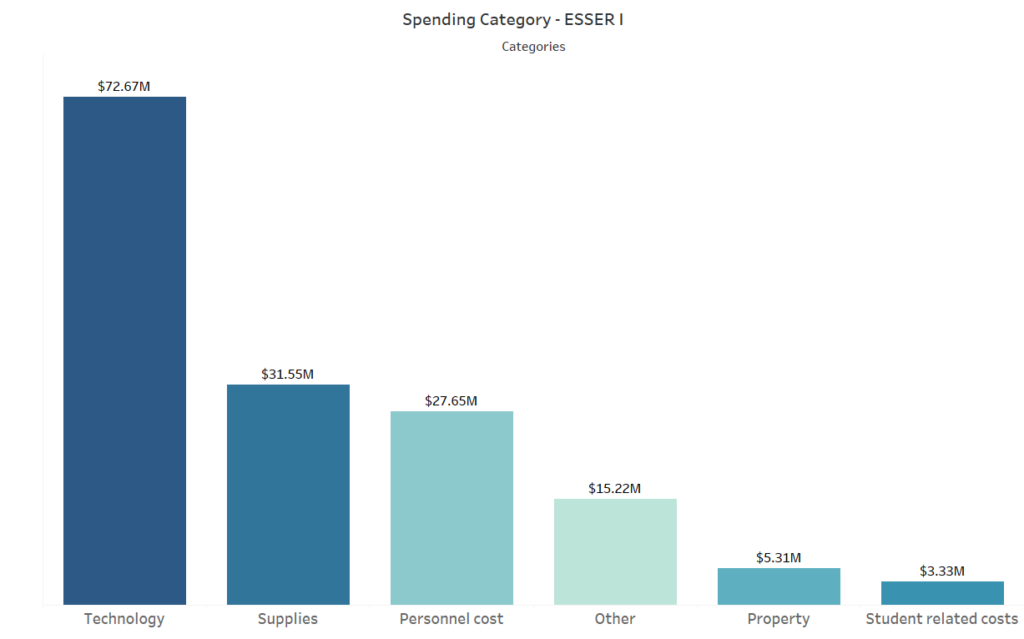
Figure 2: Across the state $72.67 million from ESSER I funding was spent in Techonology
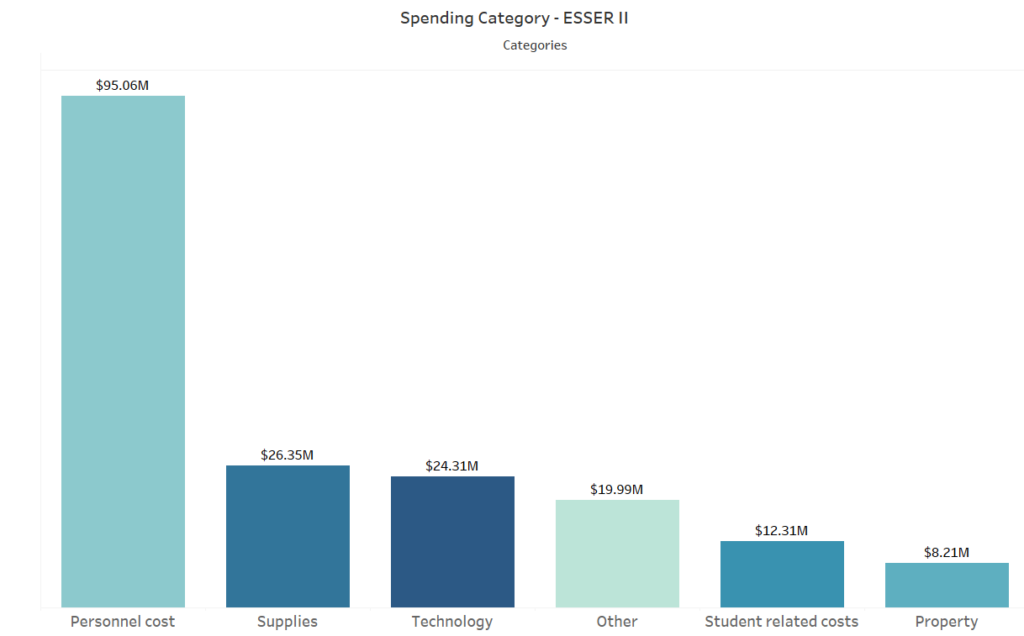
Figure 3: Across the state $95.06 million of the ESSER II was spent in Personnel cost
Finding 2: Districts spent ESSER dollars differently
ESSER funds came with flexibility as to how LEAs can spend their funding. In turn, we found variability in how LEAs prioritized different spending goals. For example, as a whole for the state, purchasing technology equipment was the main expense with ESSER I funds, but some LEAs prioritized spending on student-related activities. The below graphs shows how different LEAs prioritized spending on technology and student-related activities differently.
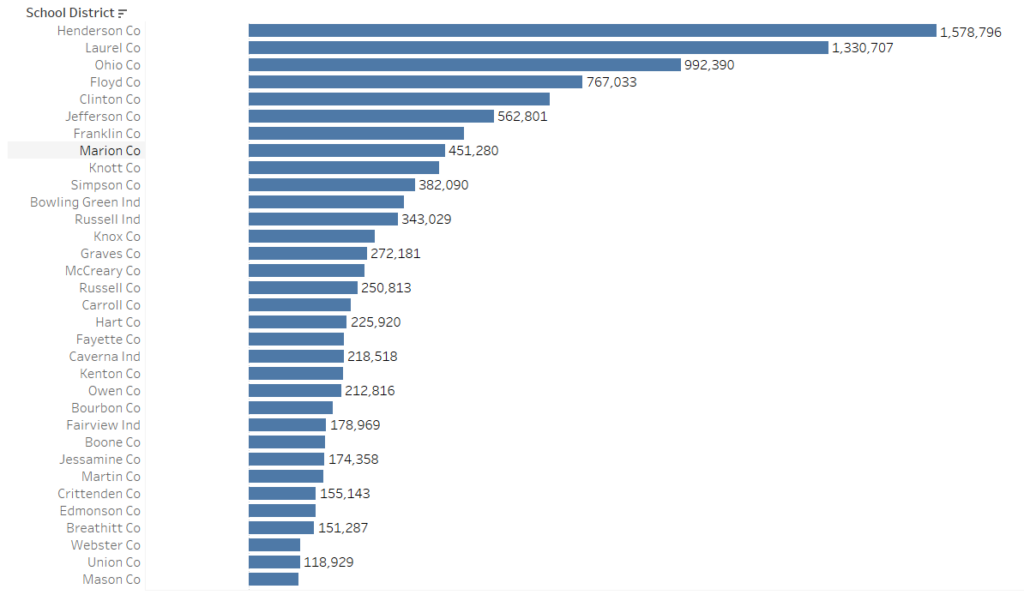
Figure 4: Top districts that spend on Student related activities. Henderson School district spent $1.58 million in student related activities
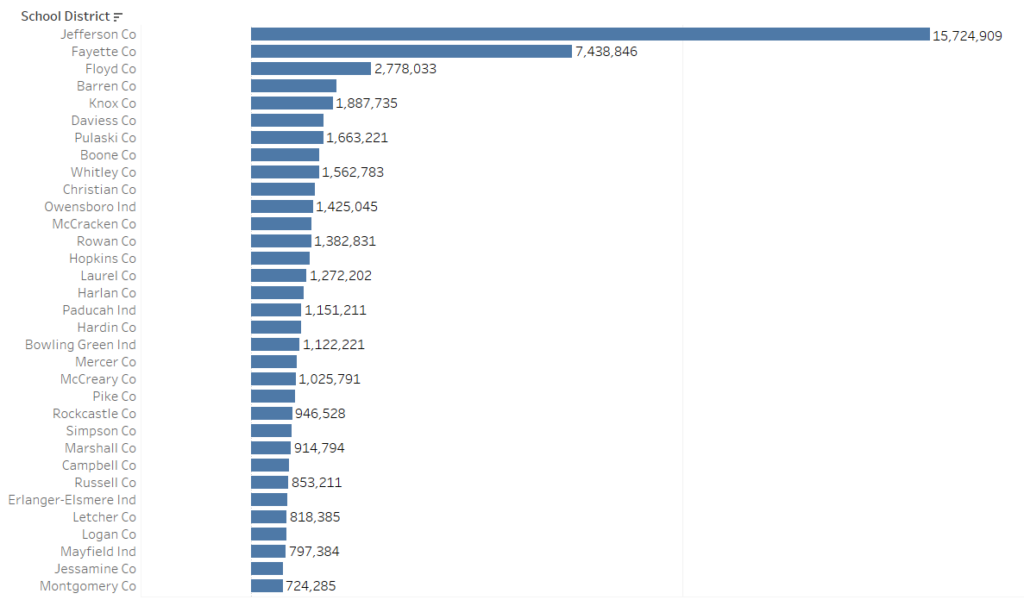
Figure 5: Top districts that spend on Technology purchases. Jefferson School district spent $15.7 million in technology
Finding #3: Future research should focus on measuring impact of spending
In future research, it is important to evaluate how these differences in spending priorities of LEAs were able to meet the policy goal of the ESSER funding for two main reasons. Firstly, the LEAs in Kentucky received over $2.7 billion of federal taxpayer dollars; there must be transparency and accountability of whether these funds were used effectively in meeting the policy goals. Secondly, knowing which expenses were the most effective in meeting the policy goals can help future decision-making if LEAs were to face a similar crisis.